Most car owners have never heard the term “PK belt” until something goes wrong. Yet PK belts are among the hardest-working components in any modern vehicle. They sit at the front of the engine, looped around several pulleys, and quietly drive the alternator, water pump, power steering pump, and air conditioning compressor every single time the engine runs. When a PK belt fails, the consequences can be sudden and expensive.
This guide is written for mechanics, workshop teams, parts retailers, and car owners who want to understand PK belts properly — what they are, how they work, how long they should last, and what to look for when one needs replacing. If you are searching for a reliable source of PK belts in the UAE, Universal Rubber Belt Manufacturing and the wider catalogue at universalbelt.ae are good starting points for both retail and trade buyers.
The goal here is to give a clear, complete picture of PK belts so that anyone — from a first-time car owner to an experienced workshop foreman — can make informed decisions about replacement, maintenance, and sourcing.
What Is a PK Belt
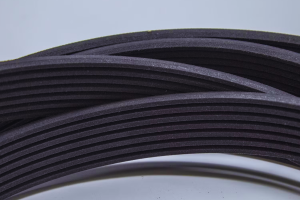
A PK belt is a flat-backed automotive drive belt with a series of small parallel ribs running along the inside surface. The ribs sit in matching grooves on the pulleys of the engine and its accessories. This combination of multiple ribs gives the belt strong grip, smooth running, and the ability to wrap around several pulleys at once.
The “PK” designation refers to the rib profile. Each rib is approximately 3.56 millimeters wide at the pitch line, which is the European DIN standard for poly V-belts.
PK belts are also known by several other names, including:
- Poly V-belts
- Multi-rib belts
- Serpentine belts (when they drive multiple accessories)
- Micro-V belts
- Ribbed accessory drive belts
In practice, the term “PK belt” and “serpentine belt” are often used interchangeably in workshops across the UAE. The technical details differ slightly, but the function is the same.
The Role of PK Belts in a Modern Engine
A modern engine has many spinning components that need power. Decades ago, each component had its own belt. Today, almost all of them are driven by a single PK belt that snakes around the front of the engine.
The accessories typically driven by a PK belt include:
- The alternator
- The water pump
- The power steering pump
- The air conditioning compressor
- The cooling fan, in some configurations
- The supercharger, on certain engines
By using a single belt, manufacturers reduce engine weight, simplify maintenance, and improve overall efficiency. It also means that one belt failure can stop multiple systems at once, which is why PK belts are so important to monitor and replace on schedule.
Anatomy of a PK Belt
Although a PK belt looks simple from the outside, it is actually a precision-engineered composite product made from several materials.
The main parts of a PK belt are:
- The outer fabric backing, which protects against abrasion
- The tension cords, made from polyester or aramid fiber
- The body compound, usually EPDM rubber for heat resistance
- The ribbed underside, which engages with the pulley grooves
The cord layer is the structural backbone of the belt. It carries the tensile load and prevents the belt from stretching under power. The compound surrounds the cord and provides flexibility, grip, and resistance to heat, oil, and abrasion.
A high-quality PK belt is built to flex thousands of times per minute, at high temperature, for tens of thousands of kilometers, without failure.
How to Read a PK Belt Code
Every PK belt is marked with a standardized code printed on its outer surface. Reading this code is the fastest way to identify the right replacement.
A typical PK belt code looks like this: 6PK1850
The code is broken down as follows:
- The first number indicates the number of ribs (in this case, six)
- “PK” identifies the rib profile
- The final number is the effective length of the belt in millimeters (1,850 mm)
So a 6PK1850 is a six-rib PK belt with an effective length of 1,850 millimeters.
Some manufacturers add additional letters or suffixes to indicate specific construction or compound features. When in doubt, the safest approach is to cross-reference the code with the vehicle’s make, model, year, and engine code.
PK Belt vs Serpentine Belt vs Poly V-Belt
Many car owners get confused by the different names used for what is essentially the same component.
The terminology generally works like this:
- “Poly V-belt” is the engineering term for a flat belt with multiple ribs
- “PK belt” specifies the European DIN profile of those ribs
- “Serpentine belt” refers to a single belt that drives multiple accessories
- “Multi-rib belt” is a generic descriptor
In practice, almost every modern car serpentine belt is a PK belt by profile. Mechanics use the words interchangeably, and parts catalogues usually list belts by both their PK code and their vehicle application.
For a car owner, the practical takeaway is this: if your mechanic talks about replacing your “serpentine belt,” they are almost certainly referring to a PK belt.
Why PK Belts Replaced Classical V-Belts
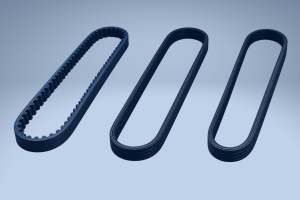
Older vehicles used classical V-belts — wedge-shaped belts that ran in V-grooved pulleys. Many engines used two or three of them in parallel, each driving one accessory.
PK belts replaced classical V-belts for several reasons:
- A single PK belt can drive multiple accessories
- The flat-back design allows the belt to bend in either direction
- Multiple small ribs provide better grip than one large wedge
- They run quieter and cooler than classical V-belts
- They reduce engine weight and complexity
Today, almost every passenger vehicle on UAE roads uses PK belts in the accessory drive. Classical V-belts are still common in industrial machinery and older vehicles, but they have largely disappeared from new car platforms.
Types of PK Belts on UAE Roads
The UAE vehicle parc is exceptionally diverse, with cars from every major manufacturing region in the world. The PK belts you encounter reflect that diversity.
Common PK belt configurations on UAE roads include:
- 4PK and 5PK belts on smaller engines
- 6PK belts on the majority of mid-size sedans and SUVs
- 7PK belts on V6 and certain V8 engines
- 8PK belts on trucks, vans, and high-output engines
Belt lengths can vary from under 700 mm to well over 2,500 mm, depending on the engine and accessory layout. Workshops in Dubai routinely stock dozens of different PK belt sizes to cover this range.
How a PK Belt Actually Works in Your Engine
A PK belt does its work through friction. The ribbed underside of the belt sits in the matching grooves of each pulley. As the crankshaft pulley turns, friction between the belt ribs and the pulley grooves transfers torque to every accessory in the loop.
For this to work reliably, three things must remain in balance:
- Belt tension, set by the tensioner
- Pulley alignment, which keeps the belt running straight
- Belt condition, which determines grip and flexibility
If any of these falls out of specification, the belt can slip, squeal, vibrate, or fail prematurely.
Modern engines use automatic tensioners that maintain belt tension over its life. Older systems may use a manual tensioner or an idler pulley that needs to be adjusted at service intervals.
Lifespan of a PK Belt — What to Expect
A high-quality PK belt fitted to a healthy drive system has a long service life, but that life is finite.
Typical PK belt lifespans include:
- 60,000 to 100,000 kilometers under normal driving conditions
- 40,000 to 60,000 kilometers under severe duty or extreme heat
- Up to 120,000 kilometers for premium EPDM-compound belts
UAE drivers tend to be at the harder end of the spectrum. Continuous high temperatures, heavy air conditioning loads, dust ingress, and frequent short trips all reduce belt life.
For this reason, many UAE workshops recommend inspecting PK belts at every major service and replacing them earlier than the manufacturer’s maximum interval suggests.
Common Signs of PK Belt Wear
A worn PK belt rarely fails without warning. There are usually visible and audible clues several weeks or months in advance.
Common signs of PK belt wear include:
- A high-pitched squealing noise on engine start or under load
- Visible cracks across the rib face of the belt
- Glazing or shine on the rib surface
- Missing chunks of rubber from the ribs
- A frayed or damaged outer backing
- Vibration or pulsing under the bonnet
- Warning lights for charging or air conditioning failure
Any of these signs should trigger an inspection and, in most cases, replacement.
How to Inspect a PK Belt
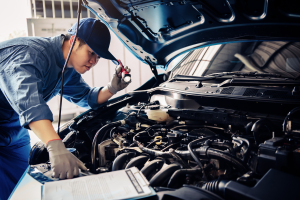
A basic PK belt inspection takes only a few minutes. It can be done by a mechanic during routine service or by a knowledgeable car owner with the engine cool and switched off.
The inspection should cover:
- The rib surface, looking for cracks, missing chunks, or glazing
- The belt edges, checking for fraying
- The outer backing, looking for splits or oil contamination
- Belt deflection, to confirm correct tension
- Pulley condition, including the tensioner and idler pulleys
If any of the above is questionable, the belt should be replaced rather than risked.
What Causes PK Belts to Fail Prematurely
A PK belt that fails before its expected service life almost always has an underlying cause beyond the belt itself.
Typical causes of premature PK belt failure include:
- Misaligned pulleys
- A worn or seized tensioner
- A failing idler pulley
- Oil or coolant contamination
- Excessive heat from a cooling system fault
- Counterfeit or low-quality belts
- Incorrect installation
Replacing the belt without addressing the underlying cause usually results in another failure within a short period. Good mechanics inspect the entire drive system whenever they replace a PK belt.
PK Belts and Engine Accessories
Each accessory on the PK belt loop has its own behavior, and each can affect belt life.
Accessory-related issues include:
- A failing alternator with rough bearings
- A water pump leaking coolant onto the belt
- A seizing air conditioning compressor
- Power steering pump bearing wear
- Idler pulley bearing wear
When any of these accessories begins to fail, it places additional load on the belt, accelerates wear, and can cause sudden failure. This is why a noisy or vibrating accessory should never be ignored.
The Role of the Tensioner
The tensioner is one of the most important components in the PK belt system. It maintains correct belt tension automatically, compensating for thermal expansion, slight stretching, and load variation.
A failing tensioner can cause:
- Belt slip and squealing
- Excessive belt vibration
- Premature belt cracking
- Knocking noises from the front of the engine
- Sudden belt jump or shedding
Most mechanics recommend replacing the tensioner together with the belt, especially on higher-mileage vehicles. A new belt on an old tensioner can fail prematurely and undo the value of the replacement.
Replacement Intervals for PK Belts
Vehicle manufacturers publish recommended replacement intervals for PK belts in their service schedules. These intervals vary by model and operating conditions.
Typical guidance includes:
- Inspection every 30,000 kilometers
- Replacement between 60,000 and 100,000 kilometers
- Earlier replacement under severe duty conditions
In the UAE, severe duty is the norm rather than the exception. High ambient temperatures, dusty conditions, and heavy air conditioning use all push the belt toward earlier replacement.
A practical UAE-friendly rule is to inspect at every service and replace at the first sign of cracking or glazing.
Should You Replace a PK Belt Yourself
Some DIY car owners are comfortable replacing PK belts at home, particularly on older vehicles. Others should leave it to a workshop.
The job typically requires:
- Access to a service manual or routing diagram
- A serpentine belt tool to release the tensioner
- Adequate working space at the front of the engine
- An understanding of pulley alignment and tensioner condition
For modern vehicles with tight engine bays, multiple shrouds, and integrated tensioners, professional replacement is usually the safer choice. The cost of mistakes — a snapped belt, damaged accessories, or stranded vehicle — can far exceed the cost of paying a workshop to do it correctly.
PK Belt Costs — What Is Reasonable
The cost of a PK belt varies significantly based on quality, brand, and source.
Typical price ranges in the UAE include:
- Low-quality imported belts at the bottom of the market
- Mid-range aftermarket belts at moderate pricing
- Premium aftermarket and OEM belts at higher prices
Buying purely on price almost always backfires. A cheap belt that fails at half the expected mileage costs more in callbacks, customer dissatisfaction, and potential consequential damage than a properly engineered belt would have cost in the first place.
Choosing the Right PK Belt Supplier
Whether you are a mechanic, a parts retailer, or a fleet manager, the choice of PK belt supplier shapes your everyday operation.
A strong PK belt supplier offers:
- A complete range of common sizes
- International quality certifications
- Reliable local stock and fast delivery
- Clear cross-references to vehicle applications
- Technical support and warranty handling
UAE-based manufacturers increasingly fit this profile, providing OEM-grade quality with shorter lead times and better commercial flexibility than overseas alternatives.
UAE-Specific Considerations for PK Belts
The UAE operating environment is uniquely demanding for automotive belts.
Local conditions that affect PK belt performance include:
- Ambient temperatures over 45°C in summer
- Continuous heavy use of air conditioning compressors
- Sand and dust ingress around the engine bay
- Long-distance highway driving at sustained speeds
- Stop-start urban traffic in major cities
Belts produced in the UAE for the UAE market can be specifically engineered to handle these conditions, with heat-resistant compounds and dust-tolerant constructions. This is one of the key advantages of buying PK belts from a local manufacturer rather than relying on a generic global product.
Common Myths About PK Belts
Like any maintenance topic, PK belts attract a fair amount of misinformation in workshops, on forums, and in retail showrooms. A few common myths are worth correcting.
The most frequent myths include:
- “If the belt is not squealing, it does not need replacing.” Belts can fail without warning, especially in extreme heat. Visual inspection matters more than noise.
- “All PK belts of the same size are equivalent.” The compound and cord construction vary widely. Two belts with the same code can have very different lifespans.
- “A new belt is always the right fix for a noise.” If the underlying tensioner or pulley is the cause, the new belt will quickly fail too.
- “PK belts last the life of the vehicle.” They do not. Even premium belts have a defined service life and must be replaced.
- “Cheaper belts are fine for older cars.” An older car with a long-life expectation deserves a quality belt as much as a new one. Cheap belts on tired drive systems often cause cascading failures.
Educating customers — and reminding workshop teams — about these realities improves repair outcomes and reduces comebacks.
PK Belts in Specific UAE Vehicle Categories
Different vehicle categories on UAE roads place different demands on PK belts. Understanding these patterns helps both workshops and parts retailers stock and recommend the right products.
Taxis and Ride-Share Vehicles
These vehicles run extremely high mileage with continuous air conditioning use. PK belt replacement intervals are typically shorter than the manufacturer’s published schedule. Premium heat-resistant belts are strongly recommended.
Luxury Sedans and SUVs
Luxury vehicles often have complex accessory drive systems with multiple tensioners and idlers. OEM-grade PK belts or premium aftermarket equivalents are appropriate. Cheap belts are rarely a good fit for this segment.
Commercial Vans and Light Trucks
Commercial fleets prioritize uptime. Scheduled belt replacement, ideally with a UAE-based supplier holding stock, helps avoid roadside failures and lost delivery time.
Older Vehicles and Used Imports
Older vehicles in the UAE market often arrive with worn or substandard belts already fitted. A full belt-and-tensioner replacement at first service is often a sound investment for any used import.
Workshops that segment their PK belt inventory and recommendations along these lines tend to deliver better outcomes per customer and stronger word-of-mouth in their local market.
Conclusion
PK belts are small components with outsized influence on the reliability and performance of any modern vehicle. They drive the systems that keep the engine cool, the battery charged, the cabin air conditioned, and the steering effortless. When they fail, multiple systems fail at once.
For mechanics, workshops, and parts retailers, understanding PK belts — their construction, their failure modes, and their replacement requirements — is part of delivering high-quality service to customers. For car owners, recognizing the warning signs and acting on them quickly can prevent a small maintenance task from becoming a major roadside breakdown.
Whether you are looking to learn, to specify the right replacement, or to source PK belts at scale for a workshop or retail business, choosing a quality product from a trusted UAE supplier is the foundation of long-term reliability.