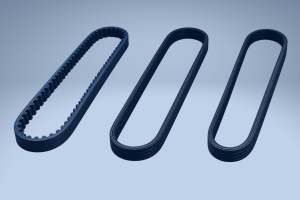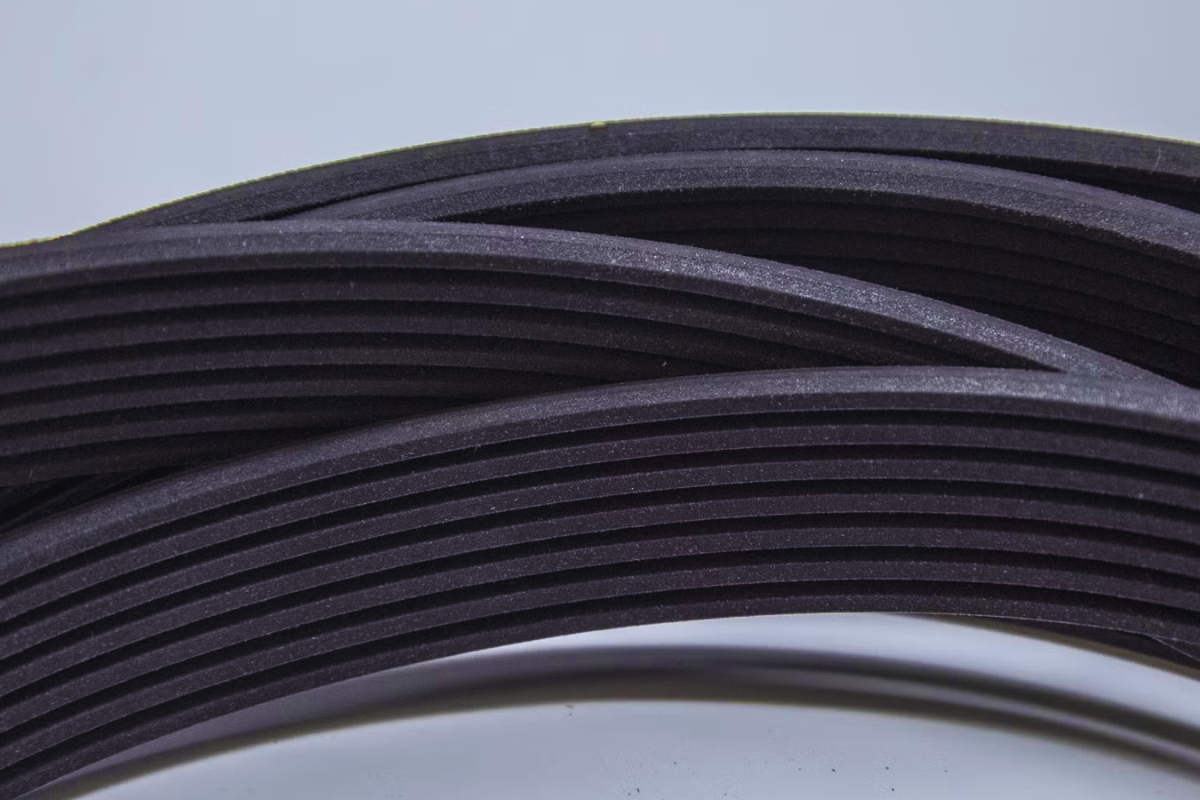
Modern vehicles rely on a single ribbed drive belt to run almost every engine accessory — from the alternator and water pump to the air conditioning compressor and power steering pump. When that belt needs replacing, the most important thing any mechanic, parts buyer, or car owner needs to know is the correct size. Getting PK belt sizes right is the difference between a job done in twenty minutes and a technician driving across town to source the one belt that actually fits.
This guide is written for everyone who works with automotive drive belts in the UAE: workshop owners, parts counter staff, fleet procurement teams, and car owners who want to understand what they are being charged for. If you are looking for a reliable local source of automotive PK belts, Universal Rubber Belt Manufacturing manufactures a full range from its Dubai factory and ships across the region. The wider trade catalogue is also available at universalbelt.ae.
Once you understand how the sizing system works, identifying and ordering the right belt becomes straightforward — even when you are dealing with an unfamiliar vehicle or a faded sticker on the engine bay cover.
How PK Belt Sizes Are Coded and What Each Number Means
The international naming convention for these multi-rib drive belts follows a consistent structure that has been standardized across manufacturers for decades. Every belt code contains three pieces of information: the number of ribs, the belt profile designation, and the effective length in millimeters.
Take the most common example from UAE workshops: 6PK1850.
This code breaks down as follows:
- 6 — the number of ribs on the underside of the belt
- PK — the profile designation for a poly V-belt (multi-rib) in the metric system
- 1850 — the effective outside length of the belt in millimeters
The rib count and length are both critical. Fitting a 6PK1850 where a 5PK1850 is required means the belt will not seat correctly in the pulley groove — the ribs will either overhang or sit improperly in the mating grooves, leading to rapid wear and belt noise. Using a 6PK1860 in place of a 6PK1850 introduces 10mm of slack that the tensioner may not fully compensate for. Neither situation ends well, which is why reading the belt code carefully is the non-negotiable starting point for every belt job.
The K-profile rib geometry is also standardized. The rib pitch — the distance between the centre of one rib and the next — is 3.56mm for all K-profile belts regardless of manufacturer or country of origin. This means a 6PK1850 from Universal Rubber Belt Manufacturing and a 6PK1850 from any other compliant manufacturer will fit the same pulley system identically. The standardization makes cross-referencing between suppliers far more reliable than it was in the era of classical V-belts, where small profile variations caused fitment problems even at the same nominal size.
Some older reference systems label the same belts using different conventions. In imperial-influenced catalogues, particularly American and older Japanese references, you may see the same belts described as J-section belts with a different length notation (for example, 060J73 or 6J1850). These are the same physical belts — the J-section rib profile is identical to the K-section — and any reputable cross-reference tool will map between the two conventions without difficulty.
Understanding the code system is the foundation on which everything else in belt management is built. A parts counter technician who can decode any belt number on sight is immediately more useful to their customers than one who depends entirely on lookup software.
Common PK Belt Sizes Found in UAE Vehicles
The Dubai vehicle parc is one of the most diverse in the world. A single workshop may service Japanese compacts, Korean SUVs, German luxury sedans, American pickups, and European vans in the same week. This variety means that knowing the most common sizes and profiles used in the UAE — and having a system for quickly sourcing the less common ones — is essential for any serious operation.
The most frequently requested belt codes in the UAE market fall into a few clear clusters by vehicle category.
Smaller engines — hatchbacks, compacts, and light vans:
The 4PK profile is the most common on small displacement four-cylinder engines, typically in lengths from around 850mm to 1,100mm. The 5PK profile appears on some European and Korean compacts where an additional rib provides extra grip on high-load accessory configurations. For this vehicle category, fast-moving codes in the UAE commonly include belts in the 4PK850 to 4PK1050 range and 5PK900 to 5PK1100 range.
Mid-size sedans and SUVs — the dominant UAE category:
The 6PK profile is the workhorse of the UAE vehicle parc. The majority of petrol engines in the 1.5L to 3.0L range use a 6PK accessory drive belt, and the spread of lengths is wide — from around 1,000mm for some compact engine layouts to over 2,100mm on larger platforms with more driven accessories. High-volume codes in UAE workshops routinely include sizes around 6PK1040, 6PK1440, 6PK1550, 6PK1750, 6PK1850, and 6PK2120, though the specific top sellers will vary by workshop location and vehicle mix.
Larger engines — V6s, V8s, commercial vehicles, and light trucks:
The 7PK and 8PK profiles appear on higher displacement engines where additional torque transmission capacity is required. Many V6 saloons and SUVs in the UAE — including popular Japanese and American models — use a 7PK belt in the 1,600mm to 2,200mm range. V8 platforms and heavy commercial vehicles commonly use 8PK belts, sometimes with a separate shorter belt for the air conditioning compressor on a secondary drive circuit.
No two workshops will have exactly the same fast-movers, because local fast-movers reflect the local vehicle mix. A workshop near Deira servicing many older Japanese and Korean vehicles will have different top-ten belt codes compared to a workshop in Business Bay primarily handling late-model European and American cars. Over the first three to six months with any supplier, reviewing actual turnover by belt code is the fastest way to build a stocking list that genuinely matches real demand rather than theoretical estimates.
How to Find the Right PK Belt Sizes for Any Car
There are three reliable methods for identifying the correct belt for a specific vehicle, and using more than one gives better confidence when dealing with unfamiliar makes or modified engines.
Method 1: Engine bay sticker
Many vehicles have a belt routing diagram affixed to the underside of the engine bay cover or on the upper radiator panel. On newer vehicles, this sticker often includes the belt code directly. On older vehicles it typically shows only the routing diagram, but the code can sometimes still be read from the belt itself if it has not been worn off or painted over. This is the fastest method when it works.
Method 2: OEM part number lookup
The original equipment manufacturer assigns a part number to every belt in the vehicle. This OEM code appears in the vehicle’s service manual, in the workshop information system (Mitchell, Autodata, AllData, and equivalent regional databases all carry this data), or through the manufacturer’s official parts portal. Once the OEM part number is in hand, any reputable belt catalogue will cross-reference it to the standard PK code.
The cross-reference step is where supplier knowledge matters. A UAE-based manufacturer with a deep range on local stock can confirm within minutes whether a given OEM number maps to a belt they carry — and often suggest a quality-equal alternative if the original is on backorder. That speed of response is operationally more valuable than a slightly cheaper unit price.
Method 3: Direct measurement
If neither the sticker nor the OEM number is available — which happens more often than it should on older vehicles, modified engines, or imports built to non-standard market specifications — the belt can be measured directly. The approach is to remove the old belt, lay it flat and measure its effective outside circumference using a flexible measuring tape, count the number of ribs, and look up the nearest standard length in a belt catalogue.
A useful practical detail: a worn belt will measure slightly shorter than its nominal dimension because the rubber has relaxed over its service life. Adding three to five millimeters to a measured worn belt gives a closer estimate of the correct new-belt size, and confirming with the supplier before ordering is always the right call when there is any doubt.
Over time, workshop technicians who regularly cross-reference PK belt sizes across multiple vehicle makes develop a strong intuition for which rib count and approximate length range applies to which engine families. That knowledge is worth building systematically — recording the confirmed belt code against the vehicle VIN in the workshop management system turns every job into permanent reference data that makes future jobs faster and cheaper.
PK Belt Sizes for Popular Vehicle Families in the UAE
While every specific vehicle has a unique belt code, knowing which rib profiles and approximate lengths are associated with common vehicle families in the UAE provides a useful mental map. The following is a practical orientation guide rather than a definitive fitment reference — always verify the exact code against the specific vehicle year, market variant, and engine specification before ordering.
Toyota: Consistently among the highest-volume vehicle makes in the UAE. The 1NZ and 2NZ four-cylinder engines used in the Yaris, Corolla, and older Avensis typically use 4PK or 5PK belts in the 850mm to 1,200mm range. The 2GR and 3GR V6 engines used in the Camry, Aurion, RAV4, and Fortuner move up to 7PK configurations. Landcruiser and Prado platforms with V8 engines typically use 8PK belts, often with longer overall lengths to accommodate the wider engine bay.
Nissan: The Sunny and Tiida compacts commonly use 5PK or 6PK belts. The Altima and Maxima with V6 engines typically require 6PK belts in the 1,900mm to 2,200mm range. The Patrol V8 uses a longer 8PK configuration and may run a secondary belt for the air conditioning compressor circuit.
Hyundai and Kia: The Accent, Elantra, and Cerato four-cylinder models generally use 5PK or 6PK belts in the 900mm to 1,400mm range. The Sonata and Tucson with 2.4L Nu engines move to longer 6PK codes. Genesis and V6 models require either 6PK or 7PK belts depending on the engine variant and market specification year.
Mitsubishi: The Lancer and Galant use 6PK belts in the 1,000mm to 1,600mm range for most configurations. The Pajero and L200 pickup cover a wider spread depending on the engine fitted, and late Pajero Sport models with diesel engines may use a separate belt for ancillary drives.
European brands: BMW, Mercedes-Benz, and Volkswagen-group platforms often require two belts — a primary serpentine belt for the main accessory drive and a shorter separate belt dedicated to the air conditioning compressor. The 6PK profile is common across these platforms, but lengths vary significantly even within the same model family across production years. European platforms also use stretch-fit belts on some newer engines — these require a special installation tool and should never be confused with standard PK belts that rely on a tensioner for installation.
For workshops, this diversity is exactly why maintaining a relationship with a supplier who carries a wide range of PK belt sizes on local UAE stock — rather than ordering each code individually from an import catalogue — directly translates to same-day repair capability and reduced customer waiting time.
Why Getting PK Belt Sizes Wrong Is Costly
A belt that is the right profile but the wrong length will be immediately obvious at installation and the job simply stops. But the more expensive mistakes are subtler, and they cost more precisely because they are not immediately obvious.
A belt that is slightly too long will sit loosely on the pulley train. The tensioner will take up some slack, but if the belt is more than a few millimeters over nominal length, the tensioner arm may be pushed toward the end of its available travel range, leaving insufficient damping capacity for transient loads such as air conditioning compressor engagement at idle. The result is belt flutter at certain engine speeds, premature tensioner bearing wear, and — in UAE summer conditions where the AC compressor runs under maximum load for extended periods — accelerated belt degradation from repeated micro-slippage at high temperatures.
A belt that is slightly too short will sit at the tighter end of the tensioner range from the day it is installed. This increases radial bearing load on every driven accessory, shortens the tensioner arm bearing life, and can put abnormal stress on the water pump shaft — a particularly expensive failure to trace back to a sizing error after the fact.
Neither of these failures announces itself on a test drive. Both show up as accelerated wear, unexplained accessory bearing failures, or a customer returning within two or three months of a supposedly completed service. The cost is measured in warranty claims, workshop reputation, and wasted labour rather than in a single clear invoice line.
Getting the correct belt code verified before installation is not a formality. It is directly tied to workshop profitability, customer retention, and the workshop’s standing as a technically reliable operation.
Stocking PK Belt Sizes: A Guide for UAE Workshops and Retailers
Once a workshop or parts retailer understands the coding system, the practical question is how to build a stocking list that covers real demand without tying up excess working capital in slow-moving inventory. The answer lies in combining three inputs.
Actual job history
Pull the last 6–12 months of belt replacements from the workshop management system and rank the belt codes by transaction frequency. The top 20 codes will typically account for 70–80 percent of all belt jobs for a given workshop. Those codes are the lines that should be physically stocked on the shelf. Everything else can be ordered on demand from a supplier with same-day or next-day local delivery capability.
Vehicle population data
For new workshops or businesses where job history is incomplete, vehicle registration data provides a useful proxy for demand. In Dubai and across the UAE, the most common vehicle makes by registration volume are Japanese, Korean, and American — and the typical belt codes for high-volume models within those makes can be obtained from any manufacturer’s cross-reference catalogue or asked directly from a knowledgeable supplier.
Supplier guidance
A good belt supplier has visibility across many customers and can identify which codes move fastest in the local market. Universal Rubber Belt Manufacturing, which supplies workshops, distributors, and parts retailers across the UAE and GCC from its Dubai factory, can guide initial stocking decisions based on actual regional demand data. The full automotive range and trade enquiry form are also available at universalbelt.ae.
A well-built stocking list for a Dubai workshop typically includes:
- The 15–20 highest-frequency belt codes from job history
- At least two or three length variants for the most popular rib counts (4PK, 5PK, 6PK, 7PK)
- Fast-moving codes for the five vehicle makes that generate the most belt jobs
- A documented process for ordering less common codes same-day from the primary supplier
- A backup supplier relationship for codes that the primary source cannot fulfil within 24 hours
The stocking list should be treated as a living document reviewed quarterly against actual turnover data. Codes that have not moved in 60 days are candidates for removal. New fast-movers identified from recent job records should be added. After two or three quarterly review cycles, most workshops find that their shelf fill rate on belt jobs approaches 100 percent — which means fewer jobs delayed, fewer customers waiting an extra day, and more revenue captured within the same opening hours.
Buying Quality Belts for Every Size: What to Look For in a UAE Supplier
The quality of the belt compound matters as much as the dimensional specification. A correctly sized belt made from a substandard or off-specification compound will fail significantly faster in UAE heat than a premium belt with identical dimensions — and the failure typically occurs at the worst possible moment, mid-summer, with a customer’s car stuck on a busy road.
When evaluating a belt supplier for workshop or retail use, the most important criteria are:
- Compound specification: EPDM (ethylene propylene diene monomer) compound significantly outperforms older neoprene-based belts in heat resistance, flex fatigue life, and resistance to oil contamination. Any supplier servicing the UAE market should be able to confirm the compound used in their products and provide data on heat resistance ratings.
- Range depth: A supplier who stocks 300 belt codes serves a workshop less reliably than one who stocks 3,000. Range depth determines the fill rate on unusual vehicle makes and prevents the commercially damaging situation of turning a customer away because the one belt they need is not available locally.
- Local stock versus import lead time: A belt sourced from UAE-held stock arrives the same day or the next morning. A belt on a sea freight consignment from an overseas manufacturer may take three to six weeks. These two options have entirely different implications for workshop turnaround commitments and customer satisfaction.
- Cross-reference support: Translating OEM part numbers into the correct standard PK code is a routine task that a good supplier handles without hesitation. A supplier who cannot provide cross-reference support is transferring that burden to the workshop counter staff, who have better uses for their time.
- Trade pricing and volume tiers: Professional belt pricing for workshops should reflect the volume relationship rather than retail walk-in rates. Manufacturer-direct purchasing — available through locally based UAE manufacturers — typically delivers better pricing than multi-tier import distribution chains, while concentrating quality accountability in the same time zone as the customer.
The UAE market contains locally manufactured belts, regional alternatives, and a wide range of imported options at various quality levels. The locally manufactured option eliminates import lead time entirely, keeps quality accountability within easy reach, and provides belts that are tested and warehoused in an environment that closely matches the operating conditions of every vehicle in the region.
Conclusion
PK belt sizes follow a clear, consistent coding system once the structure is understood: rib count, followed by the K-profile designation, followed by effective length in millimeters. Getting the right size is non-negotiable — even a small mismatch in length places abnormal stress on every component in the accessory drive system, shortens the life of the repair, and introduces warranty risk that is expensive to resolve. Whether you are running a multi-bay workshop in Dubai, managing a parts counter at an auto parts retailer, or looking up a replacement for your own vehicle, knowing how to read and cross-reference PK belt sizes gives you confidence at every step of the job.
Universal Rubber Belt Manufacturing produces the full automotive PK range from its Dubai factory, with comprehensive coverage of the sizes used across the UAE vehicle parc. If you need to verify a code, check local stock availability, or discuss trade pricing for your business, the sales team is ready to help.