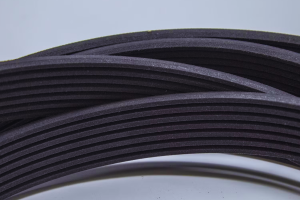
In 2026, the rubber belt industry across the Gulf, Asia, and Europe is evolving under very different industrial realities. While Asian markets drive massive production volumes and Europe focuses on technological innovation and regulatory compliance, the Gulf region is charting its own path — one defined by rapid infrastructure growth, harsh operating environments, and an increasing emphasis on reliability and service.
Unlike the mature manufacturing ecosystems of Europe or the cost-driven factories of Asia, the Gulf’s industrial landscape is powered by energy projects, logistics hubs, and large-scale construction initiatives that demand durability over scale. Every belt installed in a port, refinery, or quarry must withstand extreme heat, dust, and heavy loads — conditions that reshape what “performance” means in practice.
This article explores how the rubber belt market in the Gulf compares to Asia and Europe in 2026, highlighting key contrasts in growth drivers, pricing, technology adoption, and sustainability trends. It also examines why the region, though smaller in absolute size, has become a strategic premium segment in the global market — one where innovation and reliability define success more than volume.
Market Size & Growth: GCC vs Asia vs Europe
Global market context
Globally, the rubber conveyor belt market is estimated at around USD 3.9 billion in 2024, with forecasts suggesting a rise to around USD 5.8 billion by 2034. Global Market Insights Inc.+1 Another estimate places a 2025 value at USD 4.5 billion with a CAGR of ~4.3 % through to 2030. Mordor Intelligence+1
Asia-Pacific region
Asia remains the largest regional base. One report indicates Asia-Pacific held around ~34 % share of a global conveyor belt market in 2025. Cognitive Market Research+1 Another more specific estimate shows Asia-Pacific dominance at ~37.5 % in 2024 for rubber conveyor belts, driven by rapid industrialisation in China, India and Southeast Asia. Data Bridge Market Research These figures point to a strong base in Asia with steady growth.
Europe
In Europe, demand for conveyor belts (including rubber types) is expected to grow from USD 961.5 million in 2025 to USD 1,437 million by 2035, at a CAGR of ~4.1 %. Future Market Insights While this is for conveyor belts broadly (not exclusively rubber types), it gives a sense of scale and stability in the European market.
GCC (Gulf Cooperation Council) region
While specific public data for the GCC rubber belt market is limited, some global reports allocate the Middle East region (which includes the GCC) ~7.3 % of the global conveyor belt market by 2025. Cognitive Market Research Given the smaller industrial base relative to Asia or Europe, the absolute size is lower. However, growth opportunities and shifts in procurement behaviour in the GCC make it strategically interesting.
Comparative snapshot
| Region | Relative Market Size* | Key Growth Rate Estimate | Notes |
|---|---|---|---|
| Asia | Largest share (~30-40 %) | ~4-5 %+ CAGR | Large industrial base, high volume |
| Europe | Moderate share (~15-20 %) | ~4.0-4.5 % CAGR | Mature market, replacement-driven |
| GCC | Smaller share (~5-10 % approx) | Growth variable, dependent on projects | High potential but smaller base |
* Estimated share relative to global market; approximate only.
Takeaway: The GCC market is smaller in absolute size compared to Asia and Europe, but it offers distinct growth dynamics, niche premium demand, and a different procurement mindset. Suppliers and buyers should not compare it solely on volume but consider context.
Market Drivers: How the Regions Differ
Asia
The key drivers in Asia include:
- Massive infrastructure and industrial expansion (mining, cement, manufacturing in China, India, Southeast Asia). Credence Research Inc.+1
- Rapid e-commerce growth leading to new warehousing and material-handling infrastructure. Global Market Insights Inc.
- A large proportion of heavy-duty belt demand (mining, bulk handling) due to scale of projects.
- Cost-sensitive procurement alongside rising demand for premium specifications.
Europe
European drivers are slightly different:
- Industrial modernisation and automation (mature manufacturing bases in Germany, France, Italy) drive demand for upgraded belts and conveyor systems. Global Market Insights Inc.+1
- Replacement and retrofit market dominates, given slower growth in green-field expansion.
- Regulatory pressures (safety, flame retardancy, sustainability) add to demand for higher specification belts. Mordor Intelligence
- Strong service and maintenance market — buyers expect durability, local service, integration with smart systems.
GCC
In the GCC, the drivers are distinctive:
- Large-scale infrastructure and mega-projects (ports, logistics hubs, mining, new cities) are creating demand for conveyor systems and rubber belts.
- Harsh environmental conditions (heat, sand, dust, heavy loads) require high performance and robust belts.
- Procurement mindset is shifting towards life-cycle value (durability, less downtime) rather than just lowest cost (as discussed in earlier blog).
- Growing logistics, warehousing, and distribution centre development (especially in the UAE, Saudi Arabia) add moderate duty belt demand.
- Regional push for localisation and service responsiveness (local warehouses, stock, quick replacement) is more important in GCC than in some other regions.
Summary of driver differences:
- Asia: volume + industrial expansion
- Europe: replacement + specs + automation
- GCC: project-driven + premium specs + service & speed
Technology and Specification Trends: Belt Types & Regional Needs
Belt types and specifications
Across all regions, common trends include heat-resistant, abrasion-resistant, oil-resistant, and flame-retardant rubber conveyor belts. For example, one report shows heat-resistant belts held ~29 % share in 2024 globally and fire-resistant variants expected a ~5.9 % CAGR. Mordor Intelligence Textile carcass belts still dominate (~52 % share in 2024 globally) with steel-cord belts gaining for heavy duty applications. Mordor Intelligence
Asia’s technology drivers
- High volume of heavy-duty belts in mining and materials handling.
- Strong demand for cost-effective textile belts in many applications.
- Growing interest in premium belts and local manufacturing.
- Automation, IoT integration gradually increasing.
Europe’s technology drivers
- Premium specification belts dominate (durability, automation compatibility).
- Emphasis on retrofits and upgrades (rather than new large flights).
- High level of service, lifecycle support and smart monitoring.
- Sustainability and regulatory compliance influencing material choice.
GCC’s technology needs
- Belts must handle extreme heat, dust and abrasive materials → premium compounds required.
- Procurement increasingly expects belts with longer lifespans, reduced maintenance, and responsive service.
- Local service presence, fast replacement, regional stock more critical than in many other regions.
- Digital monitoring and IoT integration are becoming differentiators (though perhaps behind Asia in volume). Suppliers who can deliver high-spec and service will capture value rather than just compete on price.
Pricing, Cost Structure & Procurement Behaviour
Asia
In Asia, price competition is strong due to high volumes and many suppliers. Buyers often focus on upfront cost, though there is a trend toward higher spec belts as budgets allow. Lead times, cost of imports, and local manufacturing all play roles in cost.
Europe
Procurement emphasises value and total cost of ownership (TCO). Upfront cost may be higher, but buyers expect durability, service support and lifecycle performance. Lead times tend to be shorter because local suppliers are common. Warranty, service agreements, and lifecycle costs are important.
GCC
In the GCC, procurement behaviour is shifting. Historically, lower cost belts might have sufficed, but now buyers emphasise uptime, service, and durability. Key cost considerations: replacement frequency, maintenance downtime, lead times (which are more costly in remote sites), and availability of local support. Premium belts with higher upfront cost may be justified if they reduce downtime and maintenance. Suppliers should price accordingly—not necessarily cheapest, but value-added.
Challenges & Barriers by Region
Asia
- Cost pressures remain high; margins squeezed.
- Lead time and logistics issues in remote countries.
- Variable quality standards across many suppliers.
- Raw material cost volatility (rubber, steel cord) impacting prices and supply.
Europe
- Slow growth in many sub-sectors (replacement dominant).
- High cost base (labour, regulation) affects supplier margins.
- Many buyers focus on service and integration rather than new belt sales.
- Sustainability/regulatory compliance adds cost and complexity.
GCC
- Market size is smaller and more project-driven, so demand may be lumpy (project start/finish).
- Harsh environmental conditions demand higher-spec belts which cost more, and procurement may still be cost-sensitive.
- Logistics and lead times from imports remain a risk unless regional inventory/service is built.
- Local manufacturing is still limited; hence, reliance on imports or regional distributors.
- Suppliers must provide local support, but establishing service networks in the GCC is costly and complex.
What Suppliers & Buyers Should Learn: Comparative Insights
For Suppliers
- In Asia, compete on volume, cost-effectiveness and local manufacturing presence. Offer a range of belts from standard to premium.
- In Europe, focus on premium belts, service contracts, strong lifecycle support, automation integration and sustainability credentials.
- In the GCC, combine premium belt specification (to handle the environment) with rapid local service / stock / support. Differentiate on uptime, maintenance cost savings, and local presence rather than pure price.
- Build regional service infrastructure in GCC; emphasise local stock, fast response; partner with local distributors if needed.
- Understand raw material cost pressures globally and communicate value to supply-chain stakeholders.
- Offer digital or smart belt capability (monitoring, IoT) as a differentiator in all regions, but especially in mature markets (Europe) and high-value niche segments (GCC).
For Buyers
- In Asia, use the depth of supplier base to secure competitive pricing but be sure to check quality, warranty, and lifecycle cost—not just upfront cost.
- In Europe, emphasise total cost of ownership (TCO), service support, local supplier network and compatibility with automation/smart systems.
- In the GCC, prioritise reliability, downtime avoidance, maintenance cost, local service & rapid replacement. A cheaper belt may cost more in operational disruption.
- In all regions, request data on belt lifecycle, maintenance intervals, warranty performance and supplier service infrastructure.
- Be aware of spec escalation: as projects mature (in the GCC especially), belts must meet higher performance standards (heat, abrasion, long flights) or risk early failure.
Case Comparisons: Insights by Region
Asia: Large-scale mining belt demand
China and India continue to expand mining, bulk-material handling, and cement/steel production. These operations require heavy-duty belts with long centre-distances and high load capacity — steel-cord reinforced belts are gaining share. Mordor Intelligence+1 In cost-competitive markets there is pressure for standard belts, but also a rising segment of premium belts as operations seek higher uptime.
Europe: Retrofit and automation market
In Europe, many buyers are in retrofit mode — replacing earlier belts, integrating smart monitoring systems, upgrading to more advanced materials. According to the EU study, the conveyor belts demand will grow at ~4.1 % to 2035. Future Market Insights Suppliers with strong service and smart-belt offerings tend to capture share.
GCC: Project-led growth with premium spec demand
In the GCC, large infrastructure initiatives (ports, logistics hubs, new economic zones) are driving demand. But the environment demands high performance (desert heat, dust), so procurement is shifting to premium belts and strong service support. Although volumes may not match Asia, the value per unit and service expectations are higher. Suppliers who match local needs (stock, service, high spec) have an edge.
Future Outlook: 2026 and Beyond
Asia
Asia will continue to lead in volume growth. While many standard belt installations will persist, the premium portion (higher specification, automation, monitoring) will grow faster. Suppliers should invest in local production, service support, and differentiation.
Europe
Europe’s market will remain steady, driven more by replacement, retrofit and service than new expansions. Growth will align with automation, smart monitoring, and sustainability. Suppliers who emphasise after-sales service, monitoring integration and lifecycle performance will win.
GCC
The GCC market is poised for modest but strategic growth. As infrastructure, logistics and industrial expansion continue, belt procurement will increasingly focus on high-spec performance, rapid service, and lifecycle value. Suppliers who localise inventory and service capability, and align with buyer demands on durability and uptime, will gain competitive advantage.
Specifically for 2026 and beyond:
- Demand for premium belts (heat/abrasion resistant, longer life) will increase in the GCC.
- Service and maintenance contracts will become more standard procurement practice in the region.
- Digital monitoring and IoT integration will become a differentiator in the GCC, though adoption may lag Asia and Europe by a short margin.
- Supply chains will be refined: regional warehouses, local distributors, possible local assembly to reduce lead times and costs.
- Sustainability increasingly matters: buyers in all regions will scrutinise materials, manufacturing energy usage and supplier certification.
Strategic Recommendations
- For global suppliers: Don’t treat the GCC as simply a smaller Asia market — it has unique needs (environment, service, premium spec). Develop region-specific value propositions.
- For regional distributors in the GCC: Build strong service and stock capability; emphasise uptime, not just price. Educate buyers on lifecycle cost and downtime risk.
- For buyers in the GCC: Compare not only to standard belts but to what premium specifications deliver in uptime, maintenance savings and lifecycle cost.
- For buyers in Asia & Europe: In Asia, ensure quality and lifecycle cost are part of decision; in Europe, continue to press for smart monitoring and service integration.
- For everyone: Monitor raw material cost volatility (rubber, steel cord, synthetic compounds) and anticipate how it impacts belt pricing, lead times and supplier margins.
Conclusion
The rubber conveyor belt market across the GCC, Asia and Europe reveals both common trends and region-specific dynamics. Asia leads in volume and expansion, Europe leads in maturity, service and premium specification, while the GCC offers high-value niche demand driven by infrastructure projects, harsh operational conditions and a shifting procurement mindset.
For the GCC rubber belt market — though smaller in volume compared to Asia and Europe — the opportunity lies in premium performance, service differentiation and rapid response. Suppliers and buyers who understand these regional contrasts and adapt accordingly will be best positioned for success in 2026 and beyond.
In short: volume wins in Asia, specification wins in Europe, and service & environment-fit win in the GCC.