In high-speed industrial systems, precision is not optional—it is fundamental. As operating speeds increase, even minor mechanical inaccuracies can lead to significant performance losses, accelerated wear, and unexpected failures. Among all alignment-related factors, rubber belt alignment plays a critical role in ensuring reliability, efficiency, and long service life.
High-speed belt-driven systems magnify alignment errors. A deviation that may seem insignificant at low speed can result in severe vibration, excessive heat, noise, and premature belt failure when rotational speeds increase. For industries that rely on continuous, high-speed operation, improper rubber belt alignment is one of the most common and costly causes of downtime.
This article provides a comprehensive guide to rubber belt alignment techniques for high-speed industrial systems. It explains why alignment is critical, explores common misalignment types, outlines proven alignment methods, and highlights best practices that help maximize belt performance in demanding applications.
Why Rubber Belt Alignment Is Critical in High-Speed Systems
Belt alignment ensures that the belt runs centrally and evenly across pulleys, maintaining uniform load distribution and consistent power transmission. In high-speed systems, alignment accuracy becomes increasingly important due to the dynamic forces involved.
Poor belt alignment in high-speed applications leads to:
- Accelerated belt wear
- Edge fraying and cracking
- Increased vibration and noise
- Excessive heat buildup
- Higher bearing and shaft loads
- Reduced energy efficiency
Because high-speed systems operate with tighter tolerances, proper belt alignment is essential for maintaining mechanical stability and protecting both the belt and connected components.
Understanding High-Speed Belt-Driven Systems
High-speed industrial systems typically operate at elevated RPMs and are designed for efficiency, productivity, and continuous output.
Common high-speed applications include:
- Packaging and bottling lines
- Printing and converting machinery
- High-speed conveyors
- Textile and paper processing equipment
- Automated manufacturing systems
In these environments, belts are subjected to rapid rotation, centrifugal forces, and dynamic tension changes. These factors make accurate rubber belt alignment a fundamental requirement rather than a maintenance afterthought.
Types of Belt Misalignment
Understanding misalignment types is the first step toward effective rubber belt alignment.
Parallel (Offset) Misalignment
Parallel misalignment occurs when pulleys are parallel to each other but not positioned in the same plane. The belt is forced to track sideways as it moves between pulleys.
This condition causes:
- Uneven belt wear
- Increased friction
- Edge damage
Parallel misalignment is especially damaging in high-speed systems where lateral forces increase rapidly.
Angular Misalignment
Angular misalignment occurs when pulley shafts are not parallel. The belt contacts the pulley unevenly across its width.
Effects include:
- Twisting of the belt
- Uneven load distribution
- Increased stress on tensile cords
Angular misalignment often results in accelerated fatigue and reduced belt lifespan.
Combined Misalignment
In many real-world systems, parallel and angular misalignment occur simultaneously. Combined misalignment produces complex stress patterns that are particularly destructive in high-speed applications.
Accurate belt alignment requires identifying and correcting all forms of misalignment.
Impact of Misalignment on Belt Performance
Misalignment directly affects belt performance in several ways.
First, it increases localized stress within the belt structure. Tensile cords experience uneven loading, which accelerates fatigue and creep.
Second, misalignment generates excessive heat due to increased friction. Heat degrades rubber compounds and weakens belt bonding layers.
Third, misalignment destabilizes belt tracking, leading to vibration and noise. In high-speed systems, vibration can propagate through the entire machine, affecting overall performance.
Belt Tracking vs Belt Alignment
Belt tracking and belt alignment are related but distinct concepts.
Belt alignment refers to the geometric relationship between pulleys and shafts. Belt tracking refers to how the belt moves and positions itself on the pulleys during operation.
Poor belt alignment often causes tracking issues, but tracking problems can also result from:
- Uneven pulley surfaces
- Belt construction inconsistencies
- Tension imbalance
Effective belt alignment minimizes tracking problems and stabilizes belt motion at high speeds.
Importance of Alignment During Installation
The foundation of proper belt alignment is established during installation. Errors made at this stage are amplified during high-speed operation.
Key installation considerations include:
- Accurate pulley positioning
- Correct shaft alignment
- Proper tensioning
- Secure mounting of components
Installation-stage belt alignment reduces the need for corrective maintenance and improves long-term system reliability.
Traditional Belt Alignment Techniques
Straightedge Alignment
Straightedge alignment involves placing a straightedge across pulley faces to check alignment visually.
While simple, this method:
- Is limited in accuracy
- Depends heavily on installer skill
- Is less effective for high-speed systems
Straightedge alignment may be suitable for low-speed applications but often lacks the precision required for high-speed belt alignment.
String Alignment
String alignment uses tensioned strings to establish reference lines between pulleys.
This method improves accuracy over straightedges but still has limitations:
- Sensitive to setup errors
- Time-consuming
- Difficult to use in confined spaces
For high-speed systems, more advanced techniques are typically preferred.
Laser Belt Alignment Techniques
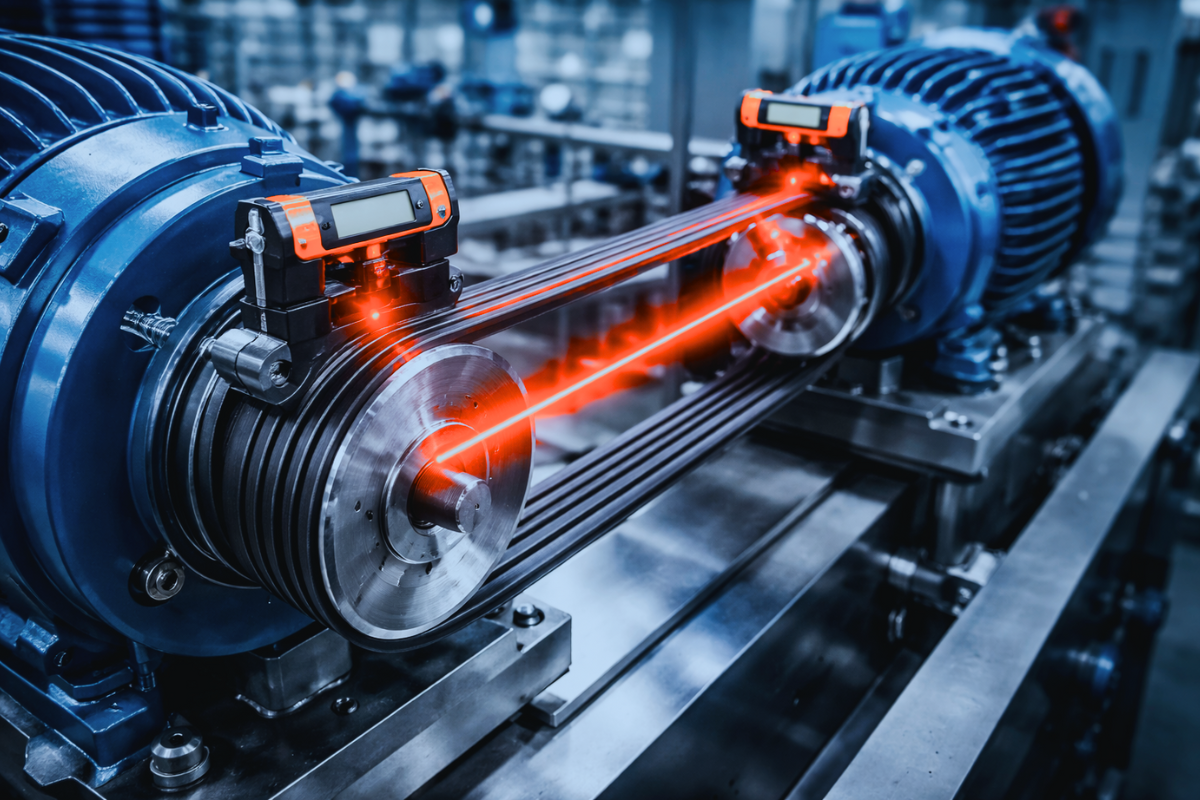
Laser alignment has become the preferred method for belt alignment in high-speed industrial systems.
Laser tools provide:
- High measurement accuracy
- Real-time feedback
- Reduced human error
- Faster alignment processes
Laser belt alignment systems project reference lines or points that precisely indicate pulley position and angular deviation.
Advantages of Laser Alignment in High-Speed Systems
Laser alignment offers several advantages over traditional methods:
- Precision suitable for high RPM operation
- Improved repeatability
- Reduced vibration and noise
- Extended belt and bearing life
In high-speed environments, laser-based rubber belt alignment significantly improves system stability and performance.
Alignment Tolerances for High-Speed Applications
Alignment tolerances become tighter as operating speed increases.
Small deviations that are acceptable at low speed can cause severe problems at high speed. Manufacturers often specify maximum allowable misalignment values based on belt type and system speed.
Following recommended tolerances is essential for maintaining belt alignment in high-speed systems.
Pulley Condition and Its Role in Alignment
Even perfectly aligned pulleys cannot compensate for poor pulley condition.
Pulley-related issues include:
- Worn grooves
- Uneven surfaces
- Improper pulley profiles
- Material buildup
Pulley inspection and maintenance are essential parts of any belt alignment process, particularly in high-speed systems.
Shaft Alignment and Structural Stability
Belt alignment depends on accurate shaft alignment and rigid machine foundations.
Shaft deflection, loose mounting, or structural vibration can cause alignment drift during operation.
High-speed systems require:
- Rigid mounting structures
- Properly aligned shafts
- Secure fasteners
Ignoring these factors undermines even the most precise belt alignment efforts.
Tensioning and Alignment Interaction
Tensioning and belt alignment are closely connected.
Incorrect tension can:
- Distort pulley alignment
- Affect belt tracking
- Increase vibration
Proper alignment should always be verified after tensioning adjustments. In high-speed systems, even minor tension changes can influence belt behavior.
Dynamic Alignment Considerations
Static alignment checks are performed when equipment is stationary. However, high-speed systems may experience dynamic alignment changes during operation.
Thermal expansion, load variation, and vibration can alter alignment under running conditions.
Advanced alignment practices may include:
- Hot alignment checks
- Vibration analysis
- Periodic alignment verification
These techniques ensure that rubber belt alignment remains stable under real operating conditions.
Common Alignment Mistakes in High-Speed Systems
Common belt alignment mistakes include:
- Relying solely on visual checks
- Ignoring shaft alignment
- Failing to inspect pulleys
- Not rechecking alignment after tensioning
- Skipping alignment verification during maintenance
These errors significantly reduce belt performance and system reliability.
Maintenance Practices to Preserve Rubber Belt Alignment
Proper maintenance helps maintain belt alignment over time.
Recommended practices include:
- Routine alignment inspections
- Monitoring vibration and noise
- Checking pulley wear
- Verifying fastener integrity
Proactive maintenance prevents gradual alignment drift that can go unnoticed until failure occurs.
Training and Skill Requirements
High-speed belt alignment requires trained personnel who understand both mechanical principles and alignment tools.
Training improves:
- Alignment accuracy
- Consistency across installations
- Safety during alignment procedures
Investing in training delivers long-term reliability benefits.
Impact of Proper Alignment on Energy Efficiency
Proper belt alignment reduces friction, slippage, and vibration, directly improving energy efficiency.
In high-speed systems, improved efficiency translates to:
- Lower energy consumption
- Reduced heat generation
- Lower operating costs
Energy savings alone can justify investment in precision belt alignment tools and practices.
Long-Term Cost Benefits of Correct Rubber Belt Alignment
Correct belt alignment reduces:
- Belt replacement frequency
- Bearing and shaft failures
- Unplanned downtime
- Maintenance labor costs
Over the equipment lifecycle, alignment accuracy delivers significant cost savings.
Future Trends in Rubber Belt Alignment Technology
Advances in alignment technology continue to improve accuracy and ease of use.
Emerging trends include:
- Digital alignment systems
- Integrated vibration monitoring
- Predictive maintenance tools
- Smart alignment sensors
These technologies further enhance belt alignment reliability in high-speed industrial systems.
Conclusion
In high-speed industrial systems, belt alignment is a critical determinant of performance, reliability, and longevity. Misalignment that might be tolerable at low speeds becomes destructive at high RPMs, leading to premature belt failure and increased operational costs.
By understanding misalignment types, applying precision alignment techniques, and maintaining alignment through disciplined maintenance practices, industrial operators can significantly improve belt performance. Accurate belt alignment is not merely a maintenance task—it is a strategic investment in system efficiency and reliability.