High-rise buildings rely on complex heating, ventilation, and air conditioning systems to maintain indoor comfort, air quality, and energy efficiency. Behind these systems are mechanical components that operate continuously under demanding conditions. Among them, Rubber Belts for HVAC applications play a crucial role in powering fans, blowers, compressors, and ventilation equipment throughout modern buildings.
Unlike many industrial environments, HVAC systems in high-rise structures must operate quietly, efficiently, and reliably across varying loads and temperature conditions. Improper belt selection or maintenance can lead to increased energy consumption, vibration, and premature equipment wear. Understanding how Rubber Belts for HVAC systems function within high-rise infrastructure helps engineers, facility managers, and maintenance teams improve performance and reduce operational risks.
This article explores how Rubber Belts for HVAC are used in high-rise buildings, the challenges these systems face, and the best practices for maximizing reliability and efficiency.
Why Rubber Belts for HVAC Systems Are Essential in High-Rise Buildings
HVAC systems are the backbone of indoor climate control in tall buildings. From rooftop chillers to basement air handling units, belts transmit power from motors to rotating equipment that circulates air and regulates temperature.
Rubber Belts for HVAC systems are commonly used in:
- Air handling units (AHUs)
- Cooling tower fans
- Exhaust and ventilation systems
- Variable air volume (VAV) systems
- Large centrifugal and axial fans
Because these components operate continuously or for extended periods, belt reliability directly affects occupant comfort and building performance.
Operational Demands of High-Rise HVAC Systems
High-rise buildings introduce unique operating conditions that influence belt performance.
Continuous or Extended Operation
Many HVAC systems run for long hours, particularly in commercial towers and mixed-use developments. Continuous operation places stress on rubber compounds and tensile cords, requiring belts designed for durability and heat resistance.
Variable Load Conditions
Modern HVAC systems often adjust airflow and cooling capacity based on demand. Variable speeds and load fluctuations require Rubber Belts for HVAC applications that maintain stable tension and resist sudden elongation.
Noise and Vibration Control
In occupied buildings, minimizing noise is essential. Properly selected belts reduce vibration and help maintain quiet operation throughout the ventilation system.
Key Applications of Rubber Belts for HVAC Equipment
Air Handling Units
Air handling units distribute conditioned air throughout a building. Belt-driven fans within AHUs must operate smoothly and efficiently to maintain consistent airflow.
Rubber Belts for HVAC systems used in AHUs require:
- Low vibration characteristics
- Stable elongation behavior
- High fatigue resistance
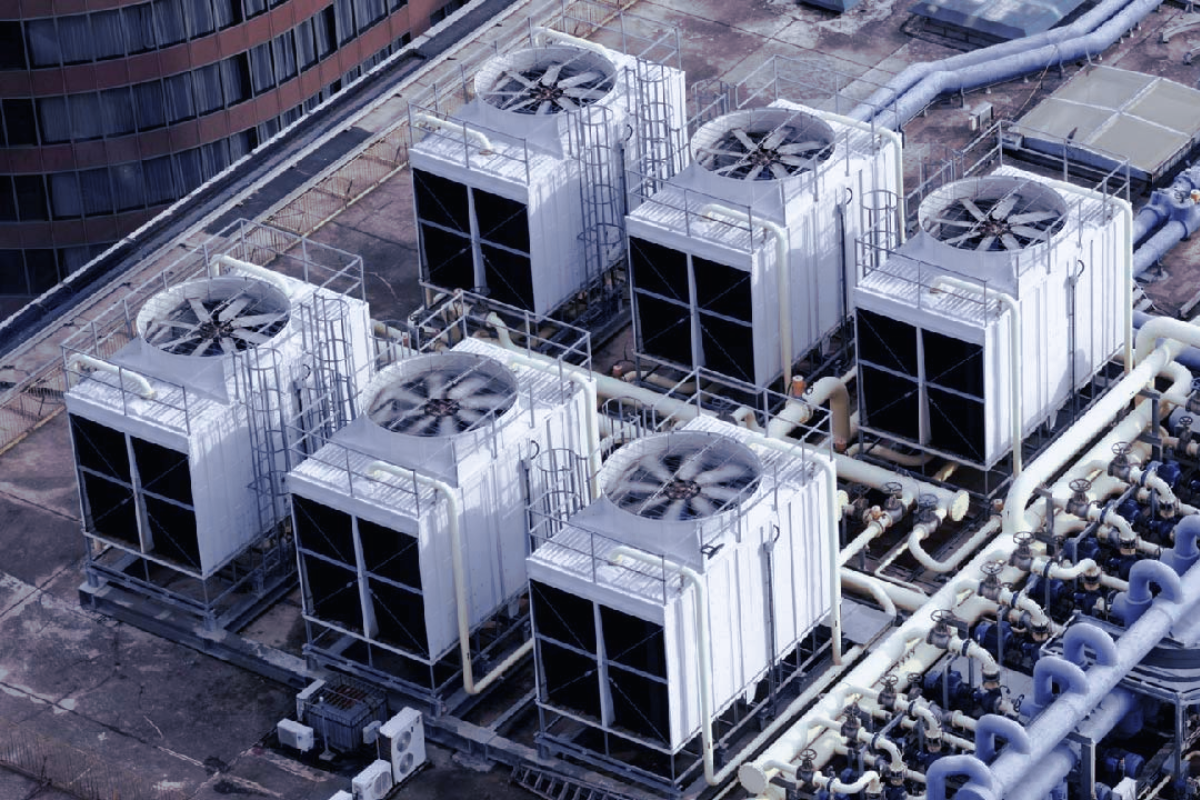
Cooling Towers
Cooling towers remove heat from chilled water systems. Belt-driven fans operate in humid environments, exposing belts to moisture and temperature changes.
Belts used in cooling towers must resist:
- Moisture exposure
- Heat buildup
- Continuous duty cycles
Exhaust and Ventilation Fans
High-rise buildings depend on powerful exhaust systems to maintain indoor air quality. Belt-driven ventilation fans operate at high speeds, making alignment and tension stability critical.
Environmental Challenges for Rubber Belts for HVAC
HVAC environments may appear less harsh than heavy industry, but they present specific challenges.
Temperature Variations
Belts operate in environments ranging from chilled mechanical rooms to warm rooftop installations. Rubber compounds must maintain flexibility across a wide temperature range.
Dust and Airborne Particles
Air handling systems accumulate dust and debris that can affect belt surfaces and pulley contact.
Humidity Exposure
Cooling towers and humid climates introduce moisture that can accelerate rubber aging if materials are not properly selected.
Material Selection for Rubber Belts for HVAC Systems
Material choice plays a significant role in determining belt lifespan.
Important properties include:
- Heat resistance for continuous operation
- Flexibility to handle variable speeds
- Resistance to ozone and environmental aging
- Low noise operation
Modern rubber compounds are designed to reduce hysteresis losses, improving efficiency while extending service life.
Tensile Cord Engineering and Belt Stability
Tensile cords determine how belts respond to load changes and tension.
Common cord options include:
- Polyester cords for balanced flexibility and strength
- Aramid cords for low stretch and high durability
In high-rise HVAC applications, dimensional stability is essential to prevent frequent retensioning and maintain consistent airflow performance.
Energy Efficiency Benefits of Rubber Belts for HVAC
Energy efficiency is a major priority in modern buildings. HVAC systems represent a significant portion of energy consumption.
Well-designed Rubber Belts for HVAC systems contribute to efficiency by:
- Reducing slippage
- Maintaining consistent tension
- Minimizing vibration losses
Efficient belt drives help building operators meet sustainability goals and reduce operational costs.
Belt Alignment Considerations in High-Rise HVAC Installations
Alignment accuracy is critical for high-speed fans and blowers.
Poor alignment causes:
- Increased noise and vibration
- Uneven belt wear
- Higher energy consumption
Routine alignment checks ensure Rubber Belts for HVAC equipment operate smoothly and extend equipment lifespan.
Installation Best Practices for HVAC Belt Drives
Correct installation is essential for achieving optimal belt performance.
Key practices include:
- Verifying pulley alignment before installation
- Applying manufacturer-recommended tension levels
- Avoiding forced installation methods
- Checking for proper belt tracking during initial operation
Proper installation reduces early wear and improves long-term reliability.
Maintenance Strategies for High-Rise HVAC Belts
Preventive maintenance programs should focus on:
- Monitoring belt tension regularly
- Inspecting for cracks or glazing
- Checking pulley condition
- Cleaning dust and debris from belt drives
Routine maintenance helps maintain consistent performance and reduces the risk of unexpected failures.
Noise Reduction and Comfort Considerations
Occupant comfort is a defining requirement in high-rise buildings.
Rubber Belts for HVAC systems help reduce noise by:
- Absorbing vibration
- Providing smooth power transmission
- Minimizing mechanical resonance
Low-noise operation enhances building comfort and supports compliance with acoustic standards.
Safety and Reliability in Building Infrastructure
HVAC failures in high-rise buildings can affect thousands of occupants. Reliable belt systems help prevent system shutdowns that disrupt building operations.
Consistent belt performance supports:
- Stable indoor climate control
- Safe ventilation levels
- Reliable emergency exhaust systems
Common Challenges Affecting Rubber Belts for HVAC
Typical issues include:
- Belt stretch due to continuous operation
- Dust buildup reducing friction
- Misalignment caused by structural vibration
- Temperature-induced aging
Understanding these challenges helps facility teams implement proactive solutions.
Sustainability and Long-Term Performance
Modern high-rise buildings emphasize sustainable operation.
Durable Rubber Belts for HVAC systems reduce:
- Energy consumption
- Replacement frequency
- Maintenance waste
Long-lasting components contribute to green building initiatives and improved lifecycle performance.
Future Trends in Rubber Belts for HVAC Technology
Innovations in materials and design continue to improve HVAC belt performance.
Emerging developments include:
- Advanced low-stretch cord materials
- Heat-resistant rubber compounds
- Smart monitoring systems for predictive maintenance
- Improved manufacturing precision
These advancements help ensure Rubber Belts for HVAC systems meet evolving performance and efficiency standards.
Conclusion
Rubber Belts for HVAC systems are essential components in high-rise building infrastructure, enabling efficient airflow, reliable cooling, and consistent indoor comfort. Operating under continuous and variable conditions requires belts that combine durability, flexibility, and energy efficiency.
By selecting appropriate materials, ensuring accurate installation, and following disciplined maintenance practices, building operators can maximize system reliability while reducing energy consumption and operational costs. As high-rise buildings continue to evolve toward smarter and more sustainable designs, advanced rubber belt solutions will remain critical to HVAC performance.